Google Ads vs Meta Ads (2026): Which Advertising Platform is Better for Your Business?
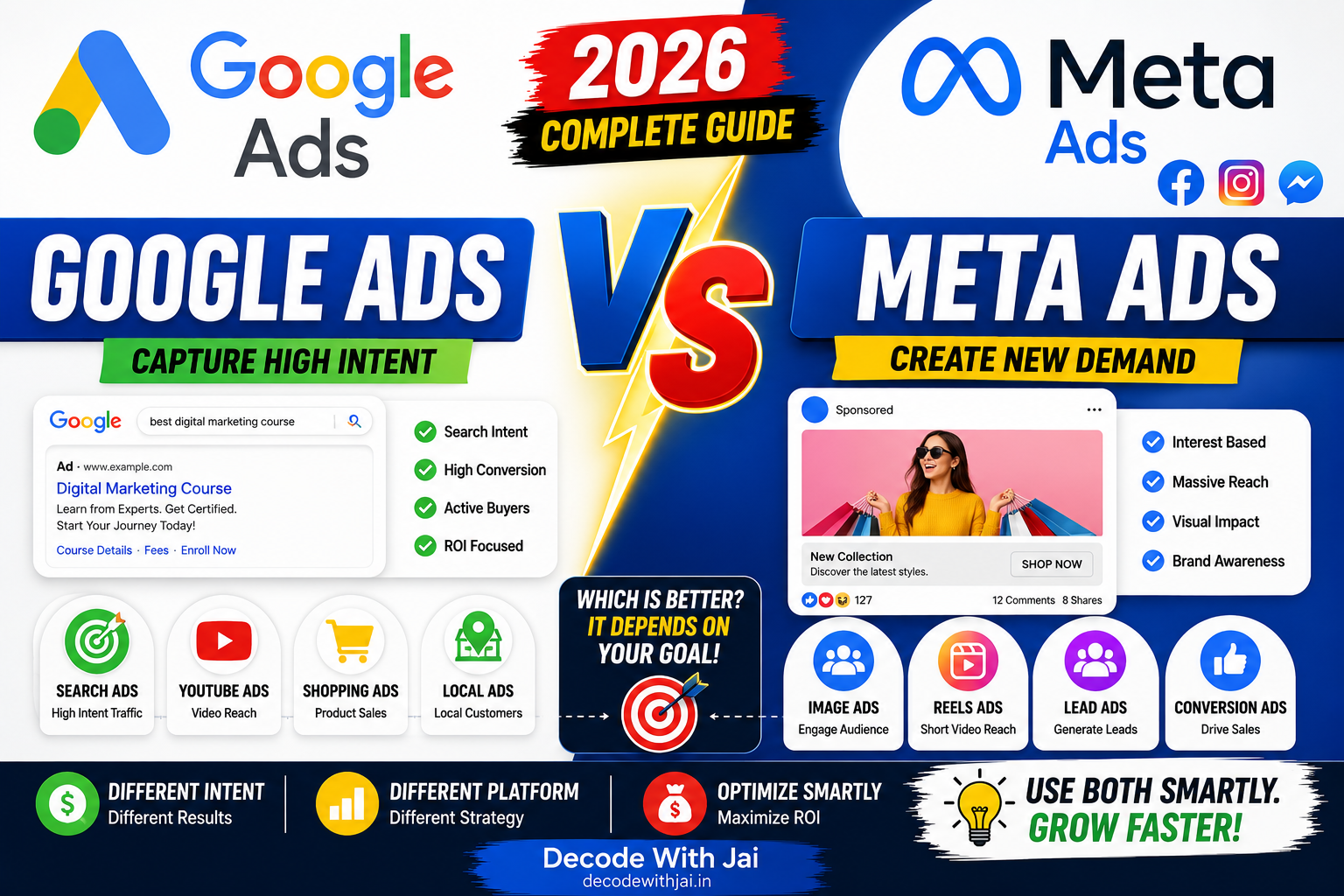
Google Ads vs Meta Ads (2026): Which Advertising Platform Should You Choose?
When it comes to online advertising, two platforms dominate the digital marketing landscape: Google Ads and Meta Ads. Businesses of all sizes rely on these platforms to reach potential customers, generate leads, drive sales, and build brand awareness.
However, choosing between Google Ads and Meta Ads isn't always straightforward. Each platform has its own strengths, targeting capabilities, pricing models, and ideal use cases. Selecting the right one depends on your goals, audience, budget, and the type of products or services you offer.
In this complete guide, we'll compare Google Ads and Meta Ads across every important factor—from audience intent and targeting to costs, ROI, campaign types, and optimization strategies—so you can make informed advertising decisions.
Table of Contents
What is Google Ads?
What are Meta Ads?
Google Ads vs Meta Ads: Key Differences
How Each Platform Works
Audience Intent
Targeting Options
Ad Formats
Campaign Objectives
Cost Comparison
ROI Comparison
Best Industries for Each Platform
Advantages and Disadvantages
Which Platform is Better?
Frequently Asked Questions
Final Thoughts
What is Google Ads?
Google Ads is Google's online advertising platform that enables businesses to display ads across:
Google Search
YouTube
Google Maps
Gmail
Google Shopping
Google Display Network
Google Ads primarily targets users based on search intent, showing ads to people actively searching for products or services.
Best For
Lead generation
Local services
E-commerce
High-intent searches
B2B marketing
Professional services
What are Meta Ads?
Meta Ads allow businesses to advertise across Meta's platforms, including:
Facebook
Instagram
Messenger
Audience Network
Unlike Google Ads, Meta Ads focus on interest-based and behavior-based targeting, helping businesses reach users even before they actively search for a product.
Best For
Brand awareness
Social engagement
Product discovery
Lifestyle brands
Fashion
Beauty
Food
Influencer marketing
Google Ads vs Meta Ads: Quick Comparison
| Feature | Google Ads | Meta Ads |
|---|---|---|
| Primary Intent | Search Intent | Interest Discovery |
| Audience | Active searchers | Passive audiences |
| Best For | Leads & Sales | Brand Awareness & Engagement |
| Platforms | Search, YouTube, Display, Maps | Facebook, Instagram, Messenger |
| Targeting | Keywords, audiences, location | Interests, demographics, behaviors |
| Ad Formats | Search, Display, Video, Shopping | Image, Video, Carousel, Reels, Stories |
| Funnel Stage | Middle & Bottom | Top & Middle |
Understanding User Intent
One of the biggest differences lies in user intent.
Google Ads
Users already have a need.
Examples:
"Best SEO agency near me"
"Buy gaming laptop online"
"Google Ads course"
These users are often ready to compare, inquire, or purchase.
Meta Ads
Users are browsing social media and are not necessarily looking for a product.
Ads interrupt the browsing experience by introducing products or services that match users' interests.
Targeting Capabilities
Google Ads Targeting
Google Ads supports targeting based on:
Keywords
Search intent
Location
Device
Language
Demographics
Audiences
Remarketing
Meta Ads Targeting
Meta Ads offer powerful audience targeting using:
Interests
Behaviors
Demographics
Lookalike Audiences
Custom Audiences
Engagement history
Ad Formats
Google Ads Formats
Search Ads
Display Ads
Shopping Ads
Performance Max
Video Ads
Demand Gen Ads
App Campaigns
Meta Ads Formats
Image Ads
Video Ads
Carousel Ads
Collection Ads
Stories Ads
Reels Ads
Instant Experience Ads
Lead Ads
Campaign Objectives
Google Ads Objectives
Sales
Leads
Website Traffic
Local Store Visits
Phone Calls
App Promotion
Meta Ads Objectives
Awareness
Traffic
Engagement
Leads
App Promotion
Sales
Both platforms provide flexible objectives, but the user journey differs because of audience intent.
Cost Comparison
Advertising costs vary by industry, competition, audience, and campaign quality.
Generally:
Google Ads often has higher CPCs because users are actively searching with purchase intent.
Meta Ads can offer lower CPCs in many industries, but performance depends heavily on creative quality and audience targeting.
Rather than focusing only on CPC, evaluate metrics such as Cost per Lead, Cost per Acquisition (CPA), and Return on Ad Spend (ROAS).
ROI Comparison
There is no universal winner.
Google Ads often performs well for businesses that capture existing demand, while Meta Ads excels at creating demand and building brand awareness.
For many businesses, using both platforms together provides stronger results than relying on one alone.
Best Industries for Google Ads
Google Ads is particularly effective for:
Local service businesses
Healthcare
Education
Legal services
Home improvement
SaaS
B2B companies
E-commerce with strong search demand
Best Industries for Meta Ads
Meta Ads are often a good fit for:
Fashion
Beauty
Fitness
Food & Beverage
Lifestyle products
Home décor
Travel
Personal brands
Influencer campaigns
Advantages of Google Ads
Captures high-intent traffic
Strong lead generation potential
Broad network across Google properties
Detailed keyword targeting
Robust conversion tracking
Excellent for local searches
Advantages of Meta Ads
Rich audience targeting
Visual storytelling opportunities
Strong brand-building capabilities
Lower entry budget
Powerful remarketing options
Wide social reach
Limitations of Google Ads
Competitive keywords can be expensive
Requires ongoing keyword management
Success depends on search demand
High competition in some industries
Limitations of Meta Ads
Users may not have immediate purchase intent
Creative fatigue can reduce performance
Success often depends on high-quality visuals and copy
Privacy changes can affect audience measurement
Should You Choose Google Ads or Meta Ads?
Choose Google Ads if you want to:
Capture customers actively searching for your products or services
Generate qualified leads
Increase phone calls
Drive direct sales
Choose Meta Ads if you want to:
Build brand awareness
Reach new audiences based on interests
Promote visually engaging products
Grow social engagement
For many businesses, a combined strategy works best: Meta Ads introduce your brand to new audiences, while Google Ads captures users when they're ready to search and convert.
Common Mistakes to Avoid
Using the same creative across both platforms without adapting it
Ignoring audience intent
Not tracking conversions
Sending traffic to generic homepages
Skipping A/B testing
Focusing only on clicks instead of business outcomes
Best Practices
Align platform choice with campaign goals.
Tailor creatives to each platform.
Install and verify conversion tracking.
Test audiences and ad variations.
Optimize landing pages for the traffic source.
Monitor performance regularly and refine campaigns based on data.
Frequently Asked Questions
Is Google Ads better than Meta Ads?
Not universally. The better platform depends on your objectives, target audience, budget, and product or service.
Which platform is better for lead generation?
Google Ads often performs strongly for high-intent lead generation, while Meta Ads can generate leads effectively with compelling offers and optimized targeting.
Which platform is better for e-commerce?
Many e-commerce brands use both. Google Ads captures purchase intent, while Meta Ads helps build demand and remarket to interested users.
Can small businesses use both?
Yes. Many small businesses start with one platform based on their goals and expand to both as their advertising budget grows.
Should I run Google Ads and Meta Ads together?
If your budget allows, combining both platforms can help cover multiple stages of the customer journey—from awareness to conversion.
Final Thoughts
Google Ads and Meta Ads are not direct competitors so much as complementary tools. Google Ads connects you with people actively searching for solutions, while Meta Ads helps you reach and nurture audiences who may not yet know they need your product.
The most successful advertisers understand each platform's strengths and use them strategically. Start with clear goals, measure meaningful business outcomes, and continuously optimize your campaigns. Over time, you'll discover the mix that delivers the best return for your business.