Google Ads Trends 2026: 20 Emerging Trends Every Marketer Should Know
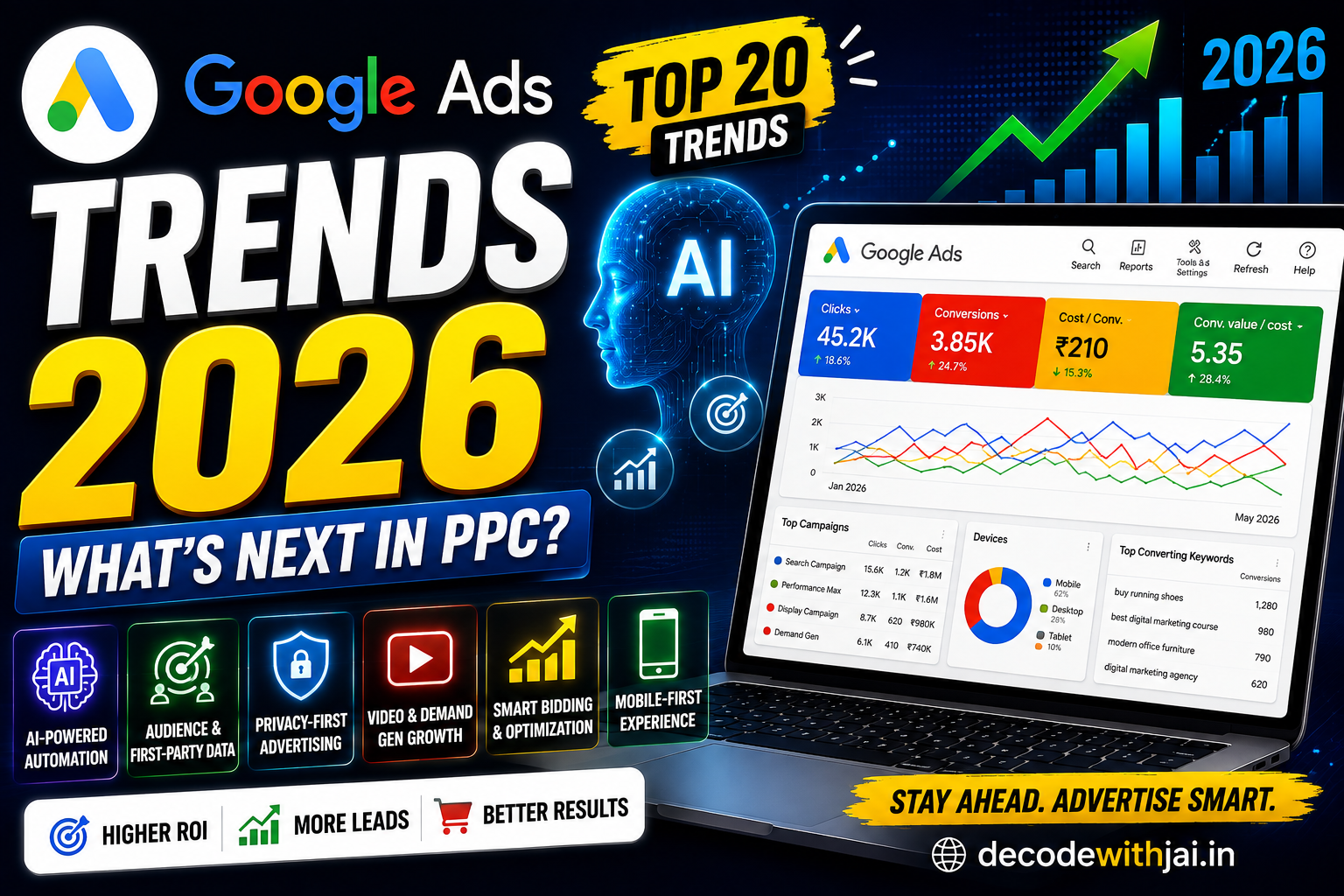
Google Ads Trends 2026: The Complete Guide to What's Changing in PPC
The world of digital advertising evolves rapidly, and Google Ads continues to introduce new features, automation tools, and privacy-focused updates that reshape how businesses reach customers. What worked a few years ago may no longer deliver the same results today.
In 2026, artificial intelligence, automation, first-party data, video content, and privacy-conscious advertising are influencing how campaigns are created, optimized, and measured. Understanding these trends can help businesses stay competitive and make informed decisions about their advertising strategies.
In this guide, we'll explore the most important Google Ads trends in 2026, explain why they matter, and share practical tips to help you adapt your campaigns.
Table of Contents
Why Google Ads Trends Matter
AI-Powered Campaign Optimization
Performance Max Evolution
Demand Gen Campaign Growth
First-Party Data Becomes More Valuable
Privacy-First Advertising
Smart Bidding Improvements
Video Advertising Expansion
Mobile-First Campaigns
Voice Search Optimization
Visual Search Opportunities
Automation in Asset Creation
Better Audience Signals
Conversion Tracking Enhancements
Landing Page Experience
Creative Testing
Local Advertising Growth
Common Mistakes
Future Predictions
FAQs & Final Thoughts
Why Google Ads Trends Matter
Keeping up with industry trends helps advertisers:
Improve campaign performance
Stay competitive
Reduce wasted ad spend
Reach customers more effectively
Adapt to platform changes
Ignoring changes in Google Ads can make campaigns less efficient over time.
Trend 1: AI-Powered Campaign Optimization
Artificial Intelligence plays an increasingly important role in Google Ads.
AI assists with:
Bid optimization
Audience targeting
Ad creation assistance
Performance forecasting
Campaign recommendations
Rather than replacing marketers, AI helps automate repetitive tasks and provides insights that support better decision-making.
Trend 2: Performance Max Continues to Evolve
Performance Max campaigns allow advertisers to reach users across multiple Google properties from a single campaign.
Benefits include:
Cross-channel reach
Automated optimization
Asset testing
Conversion-focused delivery
Advertisers should continue monitoring campaign insights and asset performance while providing high-quality creative assets.
Trend 3: Demand Gen Campaigns Gain Momentum
Demand Gen campaigns help businesses reach potential customers across visually engaging Google surfaces.
These campaigns are well suited for:
Brand awareness
Product discovery
Lifestyle products
Visual storytelling
Strong creative assets remain important for campaign success.
Trend 4: First-Party Data Becomes More Valuable
As privacy expectations evolve, businesses increasingly rely on first-party data such as:
Customer email lists
Website visitors
Loyalty program members
App users
Building trusted customer relationships and collecting consented data can strengthen audience strategies.
Trend 5: Privacy-First Advertising
Privacy continues to shape digital advertising.
Advertisers should:
Maintain clear privacy policies.
Respect user consent choices.
Configure measurement responsibly.
Keep tracking implementations up to date.
Trust and transparency are increasingly important for both users and advertisers.
Trend 6: Smarter Automated Bidding
Automated bidding strategies continue to improve by using conversion data and campaign goals to help optimize bids.
Popular strategies include:
Maximize Conversions
Target CPA
Target ROAS
Maximize Conversion Value
These strategies perform best when supported by reliable conversion tracking.
Trend 7: Video Advertising Continues to Grow
Video remains one of the most engaging advertising formats.
Effective practices include:
Capturing attention quickly
Designing for mobile viewing
Adding captions
Demonstrating products clearly
Including a strong CTA
Trend 8: Mobile-First Advertising
Most users access Google services from mobile devices.
Advertisers should prioritize:
Fast page speed
Responsive design
Simple navigation
Click-friendly layouts
Mobile-optimized forms
Trend 9: Voice Search Optimization
Voice search queries often use natural language.
Consider creating campaigns and landing pages that address conversational search intent and common questions.
Trend 10: Visual Search Opportunities
Consumers increasingly discover products through images and visual experiences.
High-quality product images and well-optimized shopping assets can improve visibility where visual discovery is available.
Trend 11: Better Audience Signals
Audience targeting continues to evolve.
Useful audience types include:
Remarketing audiences
Customer Match (where available)
In-market audiences
Affinity audiences
Combining audience insights with strong creative can improve campaign effectiveness.
Trend 12: Improved Conversion Measurement
Accurate conversion measurement remains essential.
Focus on:
Reliable tracking implementation
Meaningful business goals
Testing conversion events
Reviewing attribution reports
Good measurement supports better optimization decisions.
Trend 13: Landing Page Experience Matters More
Landing page quality influences user experience and campaign performance.
Prioritize:
Relevant content
Fast loading
Mobile usability
Clear calls to action
Trust-building elements
Trend 14: Continuous Creative Testing
Creative performance changes over time.
Regularly test:
Headlines
Descriptions
Images
Videos
Calls to action
Landing pages
Testing helps identify what resonates with your audience.
Trend 15: Local Advertising Growth
Businesses with physical locations can benefit from local campaigns by:
Keeping business information accurate.
Using location assets.
Encouraging reviews.
Creating locally relevant landing pages.
Common Google Ads Mistakes in 2026
Avoid:
Ignoring automation completely
Relying only on automation without oversight
Skipping conversion tracking
Weak landing pages
Poor-quality creatives
Not reviewing campaign insights
Ignoring audience segmentation
Best Practices for 2026
Define clear business goals.
Use accurate conversion tracking.
Optimize landing pages.
Build first-party audience relationships.
Test creatives consistently.
Review campaign performance regularly.
Balance automation with human oversight.
Stay informed about platform updates.
Google Ads Trends Checklist
✅ Keep conversion tracking updated
✅ Use high-quality creative assets
✅ Optimize landing pages
✅ Build first-party audiences
✅ Test multiple ad variations
✅ Monitor automated bidding performance
✅ Review campaign insights weekly
✅ Focus on meaningful business metrics
Future Outlook
Google Ads is likely to continue evolving with greater use of AI, automation, and privacy-conscious measurement. Successful advertisers will combine these tools with strategic thinking, quality creative, and strong customer experiences rather than relying solely on automation.
Frequently Asked Questions
What are the biggest Google Ads trends in 2026?
Key themes include AI-assisted optimization, Performance Max, Demand Gen campaigns, first-party data, privacy-focused advertising, video growth, and improved automation.
Is AI replacing Google Ads specialists?
No. AI can automate many tasks, but marketers still play an important role in setting strategy, interpreting results, creating messaging, and ensuring campaigns align with business goals.
Why is first-party data important?
First-party data comes directly from your relationship with customers and can support audience strategies while respecting user consent and privacy expectations.
Should I use automated bidding?
Automated bidding can be effective when paired with accurate conversion tracking and sufficient campaign data. Choose a strategy that aligns with your business objectives.
How can I prepare for future Google Ads updates?
Stay informed about platform changes, monitor campaign performance regularly, test new features thoughtfully, and focus on delivering value to users.
Final Thoughts
Google Ads in 2026 is shaped by smarter automation, evolving audience strategies, stronger privacy expectations, and an increasing emphasis on quality user experiences. Advertisers who embrace these trends thoughtfully—while continuing to test, measure, and optimize—will be better positioned to achieve sustainable results.
Instead of chasing every new feature, build campaigns on strong fundamentals: relevant keywords, compelling ads, effective landing pages, and reliable measurement. Then use emerging tools and trends to enhance those foundations.