Google Ads in 2026: What the Last Three Months Have Taught Us About Digital Advertising
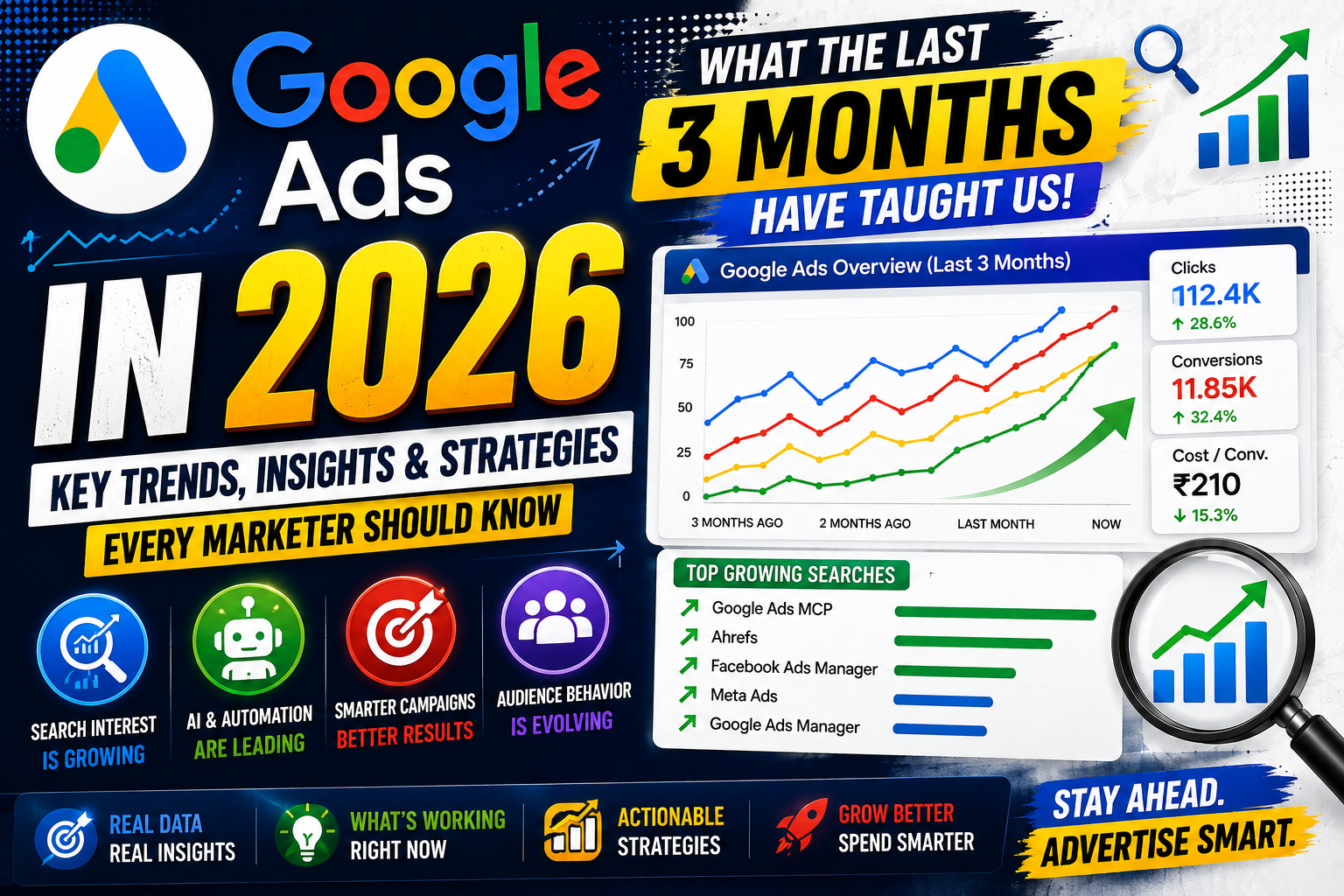
Imagine waking up every morning and checking your advertising dashboard. Yesterday's campaign looked promising, but today something feels different. The cost per click has shifted, a competitor has appeared in the auction, and customers seem to be searching in new ways.
This isn't unusual anymore.
Digital advertising no longer changes once a year—it changes almost every week.
Over the past three months, one thing has become increasingly clear: businesses are no longer just looking for ways to advertise. They are looking for smarter ways to connect with customers in a world where artificial intelligence, automation, privacy, and user expectations are evolving together.
If you've been running Google Ads—or planning to start—this is one of the biggest lessons of 2026.
A Different Kind of Search
A few years ago, advertisers spent most of their time researching keywords, adjusting bids, and checking click-through rates.
Today, the questions have changed.
Instead of asking "How do I create an ad?", businesses are asking:
- How can I automate repetitive work?
- How do I improve campaign efficiency?
- Which platform deserves my budget?
- How can AI help without sacrificing control?
This shift tells an interesting story.
Marketers are becoming strategists rather than button-clickers.
The Rise of Smarter Advertising
One of the biggest observations over recent months is the growing interest in automation.
Businesses are no longer satisfied with campaigns that simply generate clicks. They want campaigns that understand customer behavior, optimize budgets intelligently, and improve performance continuously.
Modern advertising platforms now analyze thousands of signals in real time—from device type and location to browsing behavior and purchase intent—to determine when and where an ad should appear.
For advertisers, this means spending less time making manual adjustments and more time focusing on creative ideas, customer experience, and business growth.
Automation isn't replacing marketers; it's changing the type of work marketers do.
AI Is Becoming a Daily Marketing Partner
Artificial intelligence has quietly become part of almost every stage of campaign management.
It helps brainstorm ad copy, analyze performance, recommend optimizations, generate creative concepts, and summarize reports.
But the advertisers seeing the best results aren't handing everything over to AI. They're using it as an assistant while continuing to make the strategic decisions themselves.
The strongest campaigns still begin with a clear understanding of the audience, a compelling message, and a landing page that solves a real problem.
Advertising Is No Longer a One-Platform Game
Another noticeable shift is how businesses think about advertising ecosystems.
Rather than choosing between search advertising and social media advertising, more brands are combining both.
Search campaigns capture people who are actively looking for solutions. Social campaigns help create awareness before those searches even happen.
Together, they form a more complete customer journey.
Instead of competing, these platforms often complement each other.
The Return of Strong Fundamentals
Technology evolves quickly, but some principles never change.
Successful campaigns continue to rely on:
- Relevant keywords
- Helpful landing pages
- Clear calls to action
- Fast-loading websites
- Accurate conversion tracking
- Consistent optimization
Businesses that focus on these fundamentals often outperform those chasing every new feature.
The Growing Importance of Measurement
Clicks alone no longer tell the full story.
Modern advertisers want to know:
- Which campaigns generate leads?
- Which ads drive revenue?
- Which audiences return as customers?
- Which landing pages convert best?
Meaningful measurement allows businesses to invest confidently and reduce wasted spend.
What This Means for Small Businesses
Many small business owners assume they need massive budgets to compete.
In reality, today's advertising landscape rewards relevance more than size.
A local business with a clear offer, a fast website, and a well-structured campaign can often outperform a larger competitor with a bigger budget but a weaker strategy.
Consistency matters more than complexity.
Skills Are Becoming More Valuable Than Tools
Every year brings new dashboards, automation features, and AI capabilities.
But the marketers who consistently succeed aren't those who know every button.
They're the ones who understand:
- Customer psychology
- Search intent
- Persuasive messaging
- Data interpretation
- Continuous experimentation
Tools will change.
These skills remain valuable.
Looking Ahead
If the last three months have shown us anything, it's that digital advertising is becoming more intelligent, more automated, and more focused on user experience.
Businesses that embrace change while staying grounded in strong marketing principles will be better prepared for whatever comes next.
The future won't belong to those who spend the most.
It will belong to those who learn the fastest, test the smartest, and keep the customer at the center of every campaign.
Final Thoughts
The advertising landscape in 2026 is evolving at an incredible pace, but success doesn't come from chasing every trend. It comes from understanding why those trends matter and adapting thoughtfully.
Whether you're a beginner launching your first campaign or an experienced marketer refining an established strategy, the biggest advantage isn't simply using new tools—it's combining them with clear goals, quality content, accurate measurement, and a commitment to continuous improvement.
In the end, the best campaigns aren't built by algorithms alone. They're built by people who understand their audience and use technology to serve them better.