Best Meta Ads Strategies 2026: 20 Proven Strategies to Increase ROI, Leads & Sales
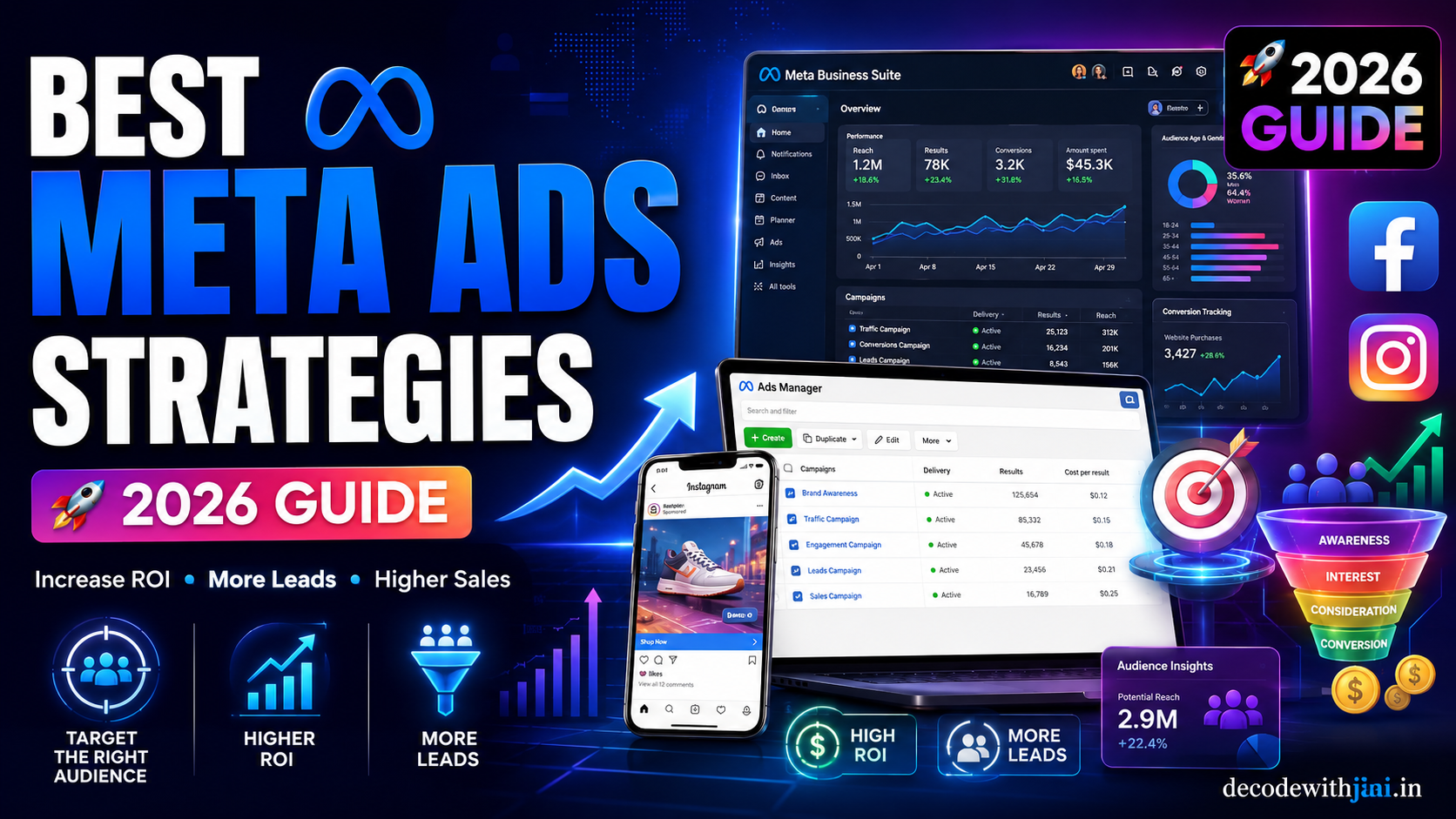
Best Meta Ads Strategies 2026: The Complete Guide to Higher Conversions & Better ROI
Meta Ads remain one of the most powerful digital advertising solutions for businesses looking to build brand awareness, generate leads, and increase online sales. With billions of active users across Facebook, Instagram, Messenger, and the Meta Audience Network, advertisers can reach highly targeted audiences at every stage of the customer journey.
However, launching a campaign is only the beginning. The real challenge lies in creating a strategy that delivers consistent results while keeping advertising costs under control.
In this complete guide, you'll learn the best Meta Ads strategies for 2026, including campaign planning, audience targeting, creative optimization, budgeting, retargeting, A/B testing, conversion tracking, and common mistakes to avoid.
Table of Contents
What Are Meta Ads?
Why Strategy Matters
Set Clear Campaign Goals
Know Your Target Audience
Choose the Right Campaign Objective
Create High-Converting Ad Creatives
Write Compelling Ad Copy
Use Video for Better Engagement
Optimize Landing Pages
Install Meta Pixel
Build Custom Audiences
Use Lookalike Audiences
Retarget Website Visitors
Budgeting Strategies
A/B Testing
Performance Metrics
Common Mistakes
Best Practices
Frequently Asked Questions
Final Thoughts
What Are Meta Ads?
Meta Ads are advertisements that run across Meta's platforms, including:
Facebook
Instagram
Messenger
Audience Network
Businesses use Meta Ads to reach audiences based on demographics, interests, online behavior, and previous interactions.
Unlike search advertising, Meta Ads focus on interest-based discovery, helping users discover products and services before they actively search for them.
Why Strategy Matters
Many advertisers assume that simply increasing their budget will improve results. In reality, campaign success depends on several factors working together, including audience targeting, creative quality, landing page experience, and optimization.
A strong strategy helps you:
Increase conversions
Lower Cost Per Result
Improve Return on Ad Spend (ROAS)
Build stronger brand awareness
Reduce wasted ad spend
Scale campaigns efficiently
Strategy 1: Define Clear Campaign Goals
Every campaign should have one primary objective.
Common goals include:
Brand Awareness
Traffic
Engagement
Leads
Sales
App Promotion
Choosing the correct objective helps Meta optimize ad delivery toward users most likely to complete your desired action.
Strategy 2: Understand Your Target Audience
Knowing your audience is one of the biggest factors in campaign success.
Define:
Age
Gender
Location
Interests
Behaviors
Income (where available)
Device usage
Purchase intent
Create audience personas to guide your targeting and messaging.
Strategy 3: Choose the Right Campaign Objective
Meta Ads Manager offers multiple objectives.
Choose based on your business goals rather than selecting a default option.
Examples:
Sales → Online purchases
Leads → Form submissions
Traffic → Website visits
Engagement → Likes, comments, shares
Awareness → Reach and impressions
Strategy 4: Create Scroll-Stopping Creatives
Creative quality is often the biggest driver of Meta Ads performance.
Best practices:
Use high-resolution images
Keep branding consistent
Show the product clearly
Highlight benefits quickly
Design for mobile-first viewing
Strategy 5: Write Benefit-Focused Ad Copy
Instead of describing features, explain how your product or service helps the customer.
Good ad copy should:
Grab attention
Address a problem
Offer a solution
Include a clear call-to-action (CTA)
Examples:
Shop Now
Learn More
Sign Up
Get Started
Download Free Guide
Strategy 6: Prioritize Video Content
Short-form videos often drive higher engagement than static images.
Effective video ads:
Capture attention in the first few seconds
Include captions
Demonstrate the product or service
End with a clear CTA
Optimize videos for vertical viewing to suit mobile users.
Strategy 7: Optimize Your Landing Page
Your ad is only the first step. The landing page should:
Match the ad message
Load quickly
Be mobile-friendly
Include a clear CTA
Build trust with reviews or testimonials
A poor landing page can reduce conversions even if your ad performs well.
Strategy 8: Install the Meta Pixel
The Meta Pixel helps measure user actions on your website, such as purchases, leads, or registrations.
Benefits include:
Conversion tracking
Better optimization
Retargeting
Audience building
Ensure the pixel is installed correctly before launching campaigns.
Strategy 9: Build Custom Audiences
Custom Audiences let you reconnect with people who already know your business.
Examples:
Website visitors
Existing customers
Email subscribers
App users
Video viewers
Facebook or Instagram engagers
These audiences often convert better than cold audiences.
Strategy 10: Use Lookalike Audiences
Lookalike Audiences help you reach new users who share characteristics with your existing customers.
They are useful for:
Scaling campaigns
Finding similar buyers
Expanding reach while maintaining relevance
Strategy 11: Retarget Interested Users
Not everyone converts on their first visit.
Retarget users who:
Viewed products
Added items to cart
Visited key pages
Watched videos
Opened lead forms
Tailor messaging to encourage them to complete the next step.
Strategy 12: Budget Wisely
Start with a manageable budget, evaluate results, and increase spending gradually.
Avoid making large budget changes too frequently, as they can affect campaign stability.
Allocate more budget to campaigns that consistently achieve your business goals.
Strategy 13: Test Everything
A/B testing is essential.
Test one variable at a time, such as:
Headlines
Images
Videos
CTA text
Audience segments
Placements
Landing pages
Allow enough time and data before declaring a winner.
Strategy 14: Monitor Key Performance Metrics
Track metrics that align with your goals, including:
Reach
Impressions
Click-Through Rate (CTR)
Cost Per Click (CPC)
Cost Per Result
Conversion Rate
Return on Ad Spend (ROAS)
Frequency
Review these regularly and optimize based on trends rather than short-term fluctuations.
Strategy 15: Optimize for Mobile
Most Meta users access the platform on mobile devices.
Ensure:
Vertical creatives
Fast-loading pages
Large buttons
Readable fonts
Simple forms
A seamless mobile experience improves user engagement and conversions.
Common Meta Ads Mistakes
Avoid these common errors:
Targeting audiences that are too broad
Using low-quality creatives
Ignoring the Meta Pixel
Sending users to irrelevant landing pages
Changing campaigns too frequently
Not testing new creatives
Focusing only on vanity metrics
Ignoring ad fatigue
Not excluding existing customers when appropriate
Best Practices
Set one clear objective per campaign.
Match creatives to the target audience.
Refresh ad creatives regularly.
Build and refine Custom and Lookalike Audiences.
Use the Meta Pixel for tracking and optimization.
Monitor frequency to reduce ad fatigue.
Test continuously and scale gradually.
Focus on business outcomes, not just clicks.
Meta Ads Optimization Checklist
✅ Define campaign goals
✅ Install Meta Pixel
✅ Build Custom Audiences
✅ Create Lookalike Audiences
✅ Design mobile-friendly creatives
✅ Write compelling ad copy
✅ Optimize landing pages
✅ Launch A/B tests
✅ Monitor ROAS
✅ Scale successful campaigns
Frequently Asked Questions
Are Meta Ads good for beginners?
Yes. Meta Ads Manager provides campaign objectives and targeting tools that make it accessible for beginners, though ongoing testing and optimization are important.
What is the Meta Pixel?
The Meta Pixel is a tracking tool that records user actions on your website, enabling conversion measurement, optimization, and retargeting.
What is a Lookalike Audience?
A Lookalike Audience is a group of people who share characteristics with an existing audience, helping advertisers reach potential new customers.
How much should I spend on Meta Ads?
Budgets vary by business and objective. Start with a budget you can comfortably test, then scale based on performance.
Which is better: image ads or video ads?
The answer depends on your audience and offer. Testing both formats is the best way to determine what performs best for your campaigns.
Final Thoughts
Meta Ads provide businesses with powerful tools to connect with audiences, generate leads, and drive sales. Success comes from combining clear objectives, audience research, compelling creatives, accurate tracking, and continuous optimization.
The strategies in this guide are not one-time tactics—they form an ongoing framework for improving campaign performance over time. Test consistently, analyze your results, and refine your approach based on data to maximize your advertising investment.
Suggested Internal Links
Google Ads vs Meta Ads
Google Ads for Beginners
Landing Page Optimization Guide
Conversion Tracking Setup
Common Google Ads Mistakes
Google Ads Budget Planning Guide
Google Ads Quality Score Guide
Performance Marketing Guide (future article)
Meta Pixel Setup Guide (future article)
Facebook Ads for Beginners (future article)
Image Placement Suggestions
Hero image showing Facebook and Instagram ads dashboard.
Campaign strategy roadmap infographic.
Funnel diagram (Awareness → Consideration → Conversion).
Audience targeting illustration.
Creative testing comparison graphic.
Meta Ads optimization checklist.
Target Word Count: Approximately 2,800–3,200 words.
This article fits naturally into your growing Decode With Jai digital marketing hub and creates strong opportunities for internal linking with your Google Ads content while laying the foundation for future Meta Ads guides.