Facebook Ads vs Google Ads (2026): Which Advertising Platform Is Better for Your Business?
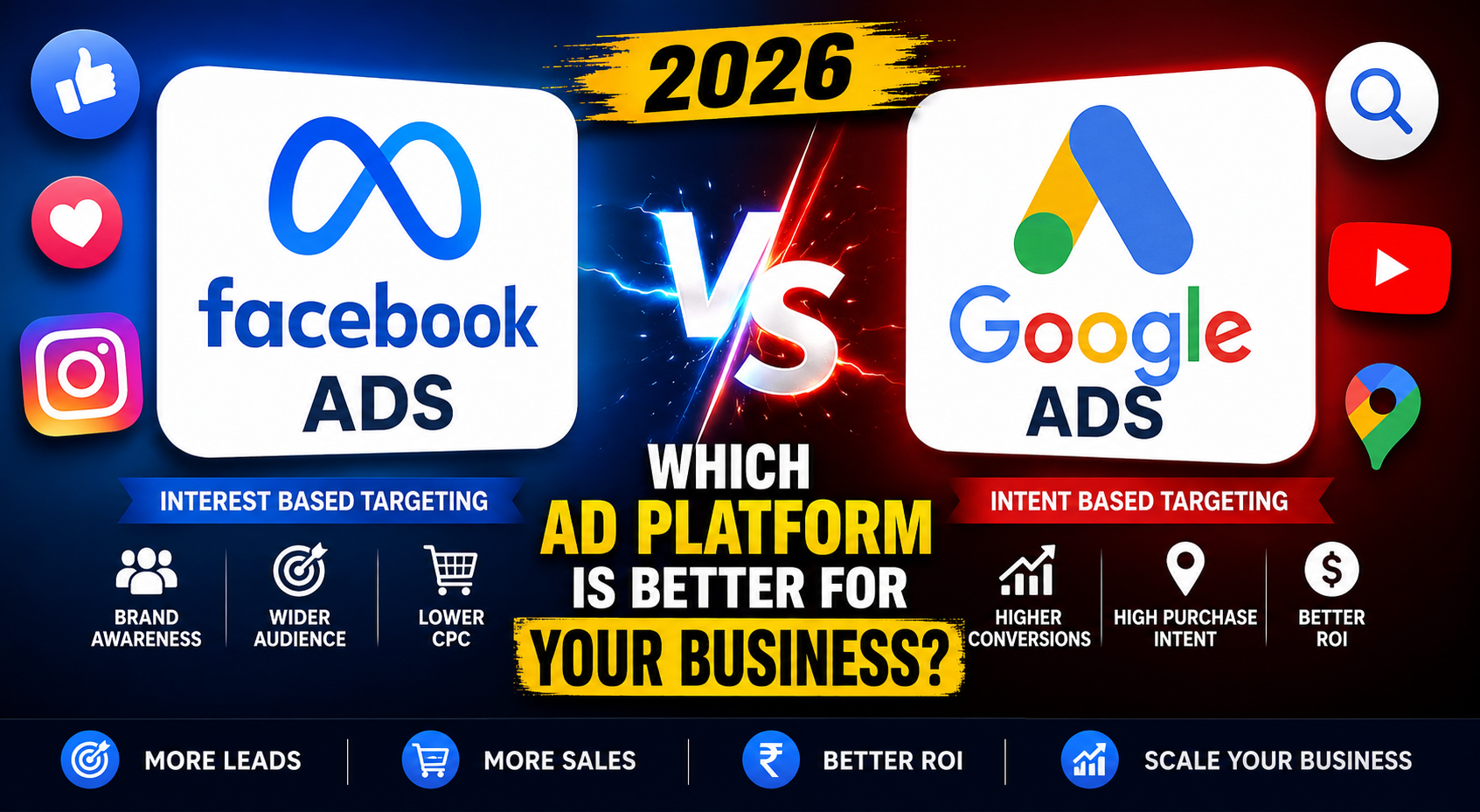
Online advertising has become one of the fastest ways to grow a business, generate leads, increase sales, and build brand awareness. Two of the biggest advertising platforms dominating the digital marketing industry are Facebook Ads (Meta Ads) and Google Ads.
Although both platforms help businesses reach potential customers, they work in completely different ways.
Google Ads focuses on search intent, showing ads to people actively looking for products or services, while Facebook Ads focuses on interest-based targeting, helping businesses reach people before they even start searching.
So which platform is better in 2026?
In this comprehensive guide, we'll compare Facebook Ads vs Google Ads based on targeting, pricing, conversions, ROI, audience, industries, and much more to help you choose the right platform.
What is Facebook Ads?
Facebook Ads, now known as Meta Ads, allows businesses to advertise across:
Facebook
Instagram
Messenger
Audience Network
Facebook Reels
Meta uses AI-powered audience targeting based on:
Interests
Behaviors
Demographics
Purchase history
Website visitors
Customer lists
Lookalike audiences
Instead of waiting for customers to search, Facebook places your product in front of people who are most likely to be interested.
What is Google Ads?
Google Ads is Google's advertising platform where businesses display ads on:
Google Search
Google Display Network
YouTube
Gmail
Google Maps
Discover Feed
Shopping Results
Google Ads primarily works using keywords.
Example:
A user searches:
Best Laptop Under ₹60,000
Google immediately displays relevant sponsored results.
This is known as high purchase intent advertising.
Facebook Ads vs Google Ads: Quick Comparison
| Feature | Facebook Ads | Google Ads |
|---|---|---|
| Audience Type | Interest Based | Intent Based |
| Best For | Brand Awareness | Sales & Leads |
| Targeting | Interests & Behavior | Keywords |
| Buying Intent | Medium | High |
| Remarketing | Excellent | Excellent |
| CPC | Usually Lower | Usually Higher |
| Conversion Rate | Good | Excellent |
| Learning Curve | Easy | Moderate |
| AI Optimization | Very Strong | Very Strong |
| Best Platform | Social Media | Search Engine |
How Facebook Ads Work
Facebook collects billions of behavioral signals including:
Likes
Comments
Shares
Interests
Shopping behavior
Device usage
Video views
Its AI predicts who is most likely to engage with your ad.
Example:
A fitness brand can target:
Gym lovers
Yoga enthusiasts
Protein supplement buyers
Health-conscious users
Even if they haven't searched for the product.
How Google Ads Work
Google Ads works differently.
Instead of targeting interests, it targets search intent.
Example searches:
Buy Running Shoes
SEO Agency Near Me
Best Laptop 2026
Digital Marketing Course
These users already want something.
That usually leads to higher conversion rates.
Targeting Comparison
Facebook Ads
Target by:
Age
Gender
Location
Interests
Education
Relationship status
Occupation
Income (available in some regions)
Device
Custom Audiences
Lookalike Audiences
Winner:
Facebook Ads
Google Ads
Target by:
Keywords
Location
Language
Device
Time
Search Intent
Customer Match
Audience Segments
In-Market Users
Winner:
Google Ads for purchase intent.
Cost Comparison
Average CPC (may vary by industry):
Facebook Ads
$0.30–$2.50
Google Ads
$1–$10+
Competitive industries can exceed $50 per click.
Facebook generally offers cheaper clicks.
Winner:
Facebook Ads
Conversion Rate Comparison
Google users are actively searching.
Facebook users are scrolling.
Therefore:
Google usually delivers:
Better leads
Better sales
Higher purchase intent
Winner:
Google Ads
Brand Awareness
Facebook dominates awareness campaigns because of:
Images
Videos
Stories
Reels
Carousel Ads
Interactive formats
Google Search isn't designed primarily for awareness.
Winner:
Facebook Ads
Lead Generation
Both platforms perform well.
Google generates:
High-quality leads
Facebook generates:
More affordable leads
The better option depends on your business goals.
E-commerce Comparison
Facebook works well for:
Fashion
Beauty
Home Decor
Lifestyle
Jewelry
Impulse purchases
Google Shopping works well for:
Electronics
Appliances
High-intent products
Price comparisons
Best strategy:
Use both together.
Local Business Advertising
Google is often the better choice for:
Dentists
Restaurants
Hospitals
Lawyers
Hotels
Local services
Users are actively searching nearby.
Winner:
Google Ads
Remarketing
Both platforms offer powerful remarketing.
Examples:
Show ads to:
Website visitors
Cart abandoners
Previous customers
Video viewers
App users
Using both platforms together often produces the best results.
AI Features in 2026
Facebook Ads
Advantage+ Campaigns
AI Creative Optimization
AI Audience Expansion
Automated Placements
Dynamic Ads
Google Ads
Performance Max
Smart Bidding
AI Asset Generation
Broad Match AI
Demand Gen Campaigns
Both platforms continue to invest heavily in AI-powered campaign optimization.
Pros of Facebook Ads
Lower advertising costs
Massive audience reach
Excellent demographic targeting
Strong visual formats
Great for awareness
Powerful remarketing
Ideal for e-commerce
Cons of Facebook Ads
Lower purchase intent
Creative fatigue over time
Privacy changes have impacted tracking
Frequent creative testing is needed
Pros of Google Ads
High purchase intent
Strong conversion rates
Excellent for local businesses
Faster lead generation
Wide ad placements
Great keyword targeting
Cons of Google Ads
Higher CPC
Competitive industries can be expensive
Requires keyword research
Campaign setup can be more complex
Which Businesses Should Choose Facebook Ads?
Facebook Ads are ideal for:
Clothing Brands
Beauty Products
Fitness Brands
Coaches
Digital Products
Mobile Apps
Startups
Personal Brands
E-commerce Stores
Which Businesses Should Choose Google Ads?
Google Ads are ideal for:
SEO Agencies
Web Developers
Hotels
Hospitals
Lawyers
Real Estate
Local Services
Educational Institutes
Repair Services
Can You Use Both Together?
Absolutely.
A winning strategy looks like this:
Use Facebook Ads to build awareness.
Retarget engaged users with Meta.
Capture high-intent searches using Google Ads.
Retarget website visitors on both platforms.
Measure conversions with Google Analytics 4.
This full-funnel approach often delivers the strongest return on investment.
Best Practices
Define clear campaign goals.
Install Meta Pixel and Google Tag.
Optimize landing pages.
Test multiple creatives.
Use A/B testing.
Monitor ROAS, CPA, CTR, and conversion rates.
Refresh creatives regularly.
Use remarketing campaigns.
Final Verdict
There isn't a single winner because both platforms serve different purposes.
Choose Facebook Ads if you want:
Brand awareness
Affordable traffic
Audience building
Visual storytelling
E-commerce growth
Choose Google Ads if you want:
High-intent leads
Sales
Local customers
Immediate conversions
Search visibility
For most businesses in 2026, the best strategy is not Facebook Ads or Google Ads—it's using both together to create a complete customer journey from discovery to conversion.
Frequently Asked Questions (FAQs)
1. Which is better for beginners: Facebook Ads or Google Ads?
Facebook Ads are generally easier for beginners because of their visual campaign setup and AI-assisted targeting.
2. Which platform provides a better ROI?
It depends on your industry and campaign goals. Google Ads often delivers higher-intent conversions, while Facebook Ads can generate lower-cost traffic and strong returns for awareness and e-commerce.
3. Are Facebook Ads cheaper than Google Ads?
In many industries, Facebook Ads have a lower average cost per click, but actual costs vary based on competition, targeting, and campaign quality.
4. Can I run Facebook Ads and Google Ads together?
Yes. Combining both platforms creates a full-funnel marketing strategy that reaches users at different stages of the buying journey.
5. Which platform is better for local businesses?
Google Ads is generally more effective for local businesses because it captures users actively searching for nearby products and services.