What is SEO? A Complete Beginner's Guide to Search Engine Optimization (2026)
Introduction
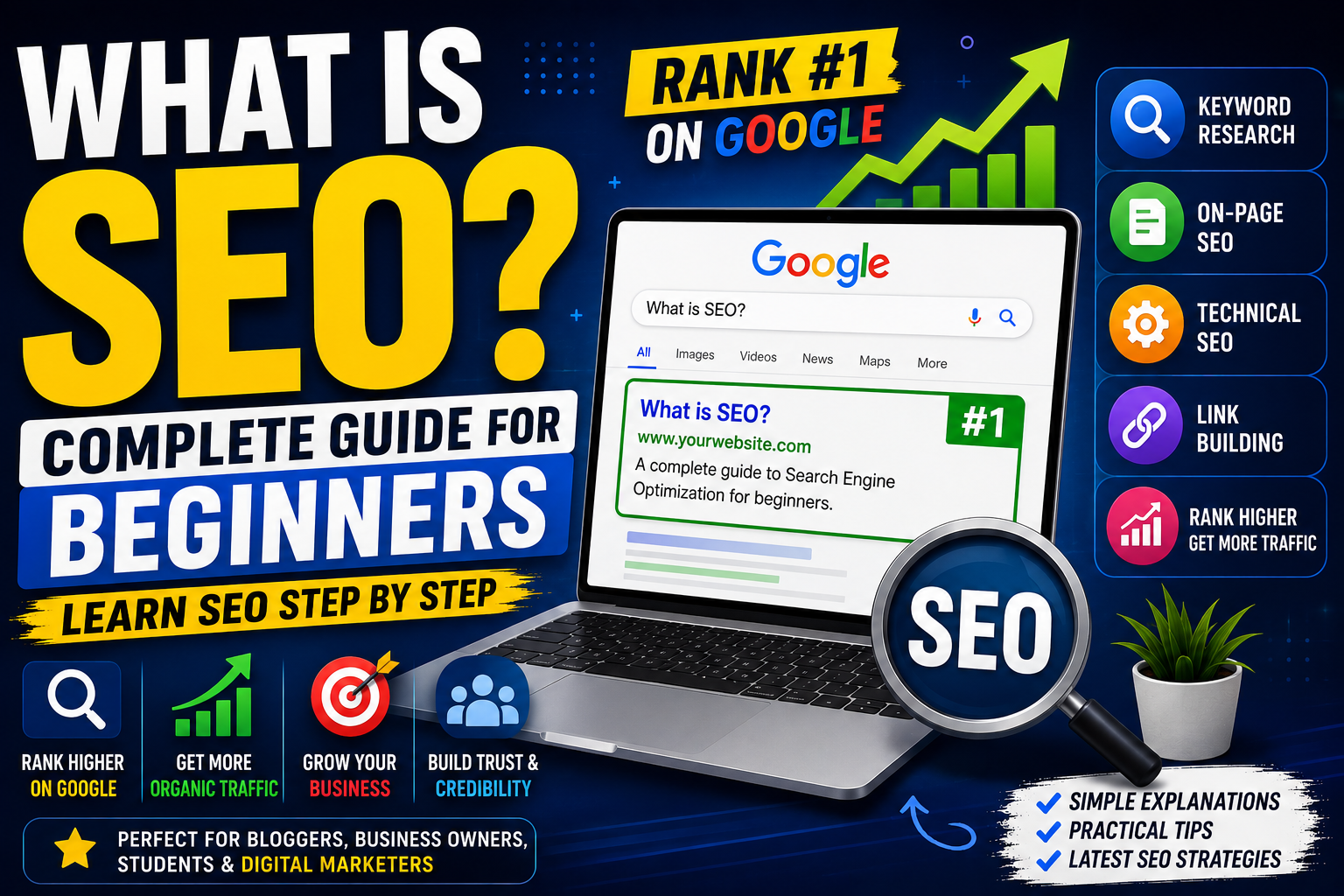
If you've ever wondered how some websites appear at the top of Google while others remain hidden, the answer is often SEO.
SEO, or Search Engine Optimization, is one of the most important digital marketing strategies for increasing website visibility, attracting organic traffic, and growing an online business.
Whether you're a blogger, business owner, freelancer, student, or digital marketer, learning SEO can help you reach more people without paying for advertisements.
In this guide, you'll learn what SEO is, how it works, why it's important, and how beginners can start optimizing their websites.
What is SEO?
SEO (Search Engine Optimization) is the process of improving a website so that it ranks higher in search engine results on platforms like Google, Bing, and AI-powered search engines.
The main goal of SEO is to increase organic (free) traffic by making your website more relevant, useful, and technically optimized.
For example:
If someone searches:
"Best AI Tools"
"How to Learn SEO"
"ChatGPT Guide"
Google tries to show the most helpful and trustworthy pages. SEO helps your content become one of those pages.
Why is SEO Important?
SEO offers long-term benefits that paid advertising cannot.
Benefits include:
✅ More organic traffic
✅ Higher Google rankings
✅ Increased brand awareness
✅ Better credibility and trust
✅ More leads and sales
✅ Lower marketing costs over time
Unlike paid ads, SEO can continue bringing visitors for months or even years after publishing quality content.
How Does SEO Work?
Search engines use three main steps:
1. Crawling
Search engine bots discover web pages by following links across the internet.
2. Indexing
After crawling, search engines store your page in their database (index).
3. Ranking
Google evaluates hundreds of ranking factors to decide where your page should appear in search results.
Types of SEO
1. On-Page SEO
Optimizing the content and structure of individual pages.
Examples:
SEO title
Meta description
Keywords
Headings
Images
Internal links
2. Off-Page SEO
Building authority through external signals.
Examples:
Backlinks
Brand mentions
Guest posts
Social sharing
3. Technical SEO
Improving your website's technical performance.
Includes:
Website speed
Mobile responsiveness
SSL certificate (HTTPS)
XML sitemap
Robots.txt
Structured data
What Are Keywords?
Keywords are the words or phrases users type into search engines.
Examples:
What is SEO?
SEO Guide
SEO for Beginners
Best SEO Tools
Using relevant keywords naturally helps search engines understand your content.
Basic SEO Checklist
Before publishing a page, make sure you:
Write a clear SEO title
Add a compelling meta description
Use headings (H1, H2, H3)
Include your focus keyword naturally
Optimize images with ALT text
Add internal links
Ensure the page loads quickly
Make it mobile-friendly
Best Free SEO Tools
Here are some beginner-friendly SEO tools:
Google Search Console
Google Analytics 4
Google Keyword Planner
Google Trends
Bing Webmaster Tools
Rank Math SEO
Screaming Frog SEO Spider (Free Version)
Common SEO Mistakes
Avoid these common errors:
❌ Keyword stuffing
❌ Duplicate content
❌ Slow-loading pages
❌ Ignoring mobile optimization
❌ Missing image ALT text
❌ Poor internal linking
❌ Publishing low-quality content
Can AI Help with SEO?
Yes. AI tools can help with:
Keyword research
Content ideas
Article outlines
Meta descriptions
Content optimization
Competitor analysis
Popular AI tools include:
ChatGPT
Google Gemini
Claude AI
Perplexity AI
However, AI should support your work—not replace human expertise and editing.
Final Thoughts
SEO is one of the most valuable skills for anyone building an online presence.
By creating helpful content, optimizing your website, improving user experience, and following SEO best practices, you can attract more organic visitors and build long-term authority.
SEO isn't about tricking search engines—it's about providing the best possible experience for your audience.
The earlier you start learning SEO, the greater your long-term advantage.
Frequently Asked Questions (FAQs)
1. What does SEO stand for?
SEO stands for Search Engine Optimization, the process of improving a website's visibility in search engine results.
2. Is SEO free?
Yes. Organic SEO doesn't require paying for clicks, although you may choose to invest in SEO tools or professional services.
3. How long does SEO take?
Most websites begin seeing noticeable results within 3–6 months, depending on competition, content quality, and consistency.
4. Is SEO difficult for beginners?
No. Anyone can learn SEO by understanding keywords, creating helpful content, optimizing pages, and practicing consistently.
5. Can AI replace SEO?
No. AI can improve SEO workflows, but strategy, expertise, creativity, and user-focused content remain essential.
6. Which is better: SEO or Google Ads?
SEO provides long-term organic traffic, while Google Ads delivers immediate paid traffic. Many businesses use both together for the best results.